

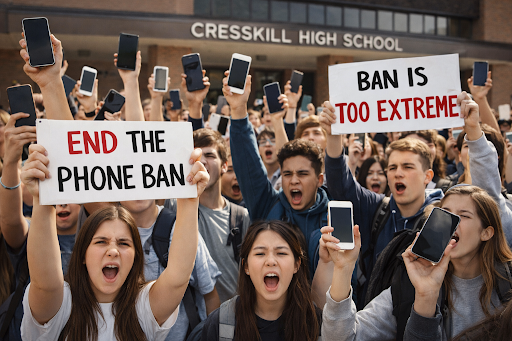
Since the implementation of the phone ban, it has been one of the most talked about changes within the last 3 years. While the school’s goal may have been to reduce distractions and improve focus, many students feel that the rule goes too far and creates more problems than it solves.
Under the new policy, students are not allowed to use their phones anywhere in the building which includes hallways, bathrooms, and during passing time. The consequences also escalate quickly: a first offense results in a warning and an email home, the second offense leads to detention, and the third offense results in an in school suspension, with resisting a teacher ending in an out of school suspension. For many students, these punishments feel extreme for something as common as checking a phone.
Riley Zitomer, a Junior at CHS, believes the school crossed a line. “I understand not wanting phones out in class, but banning them everywhere feels unnecessary.” She said. “Passing time is basically the only free time we have during the day besides lunch, and we can’t even use them during lunch. We’re not hurting anyone by checking our phones then.”
Another Junior, Eliana Harcsztark, agrees and says the rule feels unrealistic, stating: “Phones are a part of our lives, pretending they don’t exist doesn’t make school better, it just makes students more stressed. Not being allowed to check your phone even in the hallway or bathroom feels like too much control.”
Many students also disagree with the punishment system itself. Marshall Wood, also a Junior, feels the consequences don’t match the behavior. “Detention and suspension for a phone is ridiculous,” he said. “Suspension should be for serious issues, not someone quickly checking their phone between classes.”
Several students said they’ve already seen classmates get in trouble. Some have received warnings or detention simply for having their phones out in the hallway. According to Riley, these punishments often feel more like the school trying to make an example out of the students rather than actually fixing a problem. “It just creates tension,” Riley said. “People feel like they’re constantly being watched,” comparing it to the feeling of being under a dictatorship, or in a prison.
Instead of stopping phone use, many students say the rule has just changed how they use their phones. “People still use them,” Marshall explained. “They just hide it more, especially in bathrooms. The rule didn’t eliminate phones, it just made students sneakier.”
The ban has also changed the overall atmosphere of the school day. Eliana said students feel more on edge and less relaxed. “Sometimes you need to check a message from a parent or just take a mental break between classes,” she said. “Now it feels like you’re doing something wrong just for having your phone on you.”
When asked what they would change, all three students suggested a similar solution: ban phones during class, but allow them outside of it. This rule gives students a fair balance.
While improving focus in class is more than reasonable, many students feel that banning phones completely, and even threatening suspension goes too far. Instead of creating a better learning environment, the policy has left students frustrated and feeling unheard. If the school truly wants students on board, it may need to reconsider whether strict punishment is the answer, or if a more balanced approach would work better for everyone.