

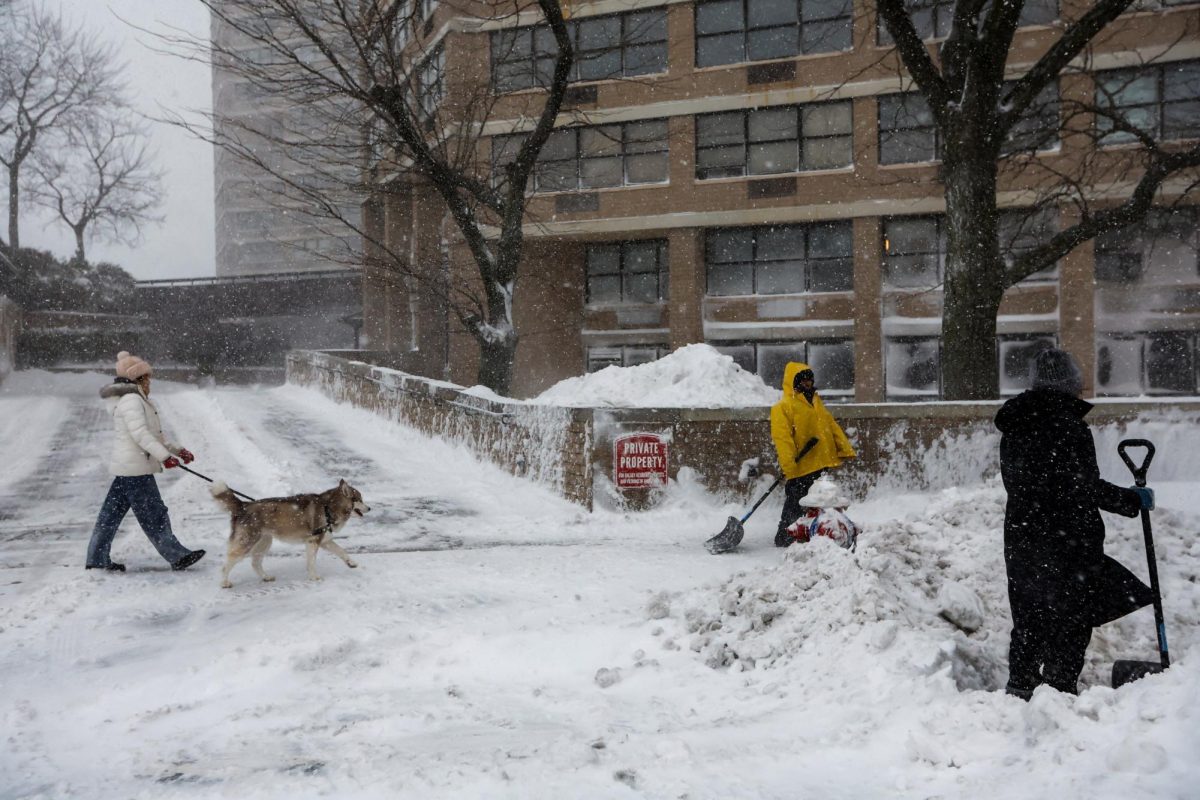
As I’m sure you’re well aware, Cresskill has had a bit of snow this year. “A bit,” meaning an unprecedented amount and easily the most snow we’ve had in over a decade. While the immediate impacts of the snow are obvious, with a closure of CHS on two separate occasions, the prolonged consequences of the several blizzards are the effects which it has on the upcoming spring athletic season.
Following the closure of school on the days of February 23rd and 24th, the weather remained cold for the following week, meaning little of the 15+ inches of snow melted by the time we reached March 1st. Although temperatures have begun to rise once again, the issue remains clear: How is all of this snow going to melt before spring sports begin? With practices beginning on March 9th, how will teams be able to manage the potential for an unprepared and chaotic start to the season?
While all sports are affected by the sheer volume of snow, certain sports face higher difficulty than others to manage with the snow. For example, the removal of snow from the tennis courts is far more feasible than clearing an entire baseball or softball field. While conditions for all sports are certainly less than ideal, sports like baseball, softball, or golf have a much harder time dealing with changes and limitations on practices.
The uncertainty of the situation again begs the question of how teams will be affected performance-wise throughout the course of the season as a result of limitations on practices. This will serve as a complication for the early scrimmages in particular, in which teams’ performance may be affected by the lack of full practices.
However, all hope is not lost. As temperatures and the melting of snow seems to be on an upward trend, there is still a possibility for spring sports to remain as scheduled. However, the tremendous amount of snow nevertheless has served as an early challenge for players and coaches alike of spring sports.