
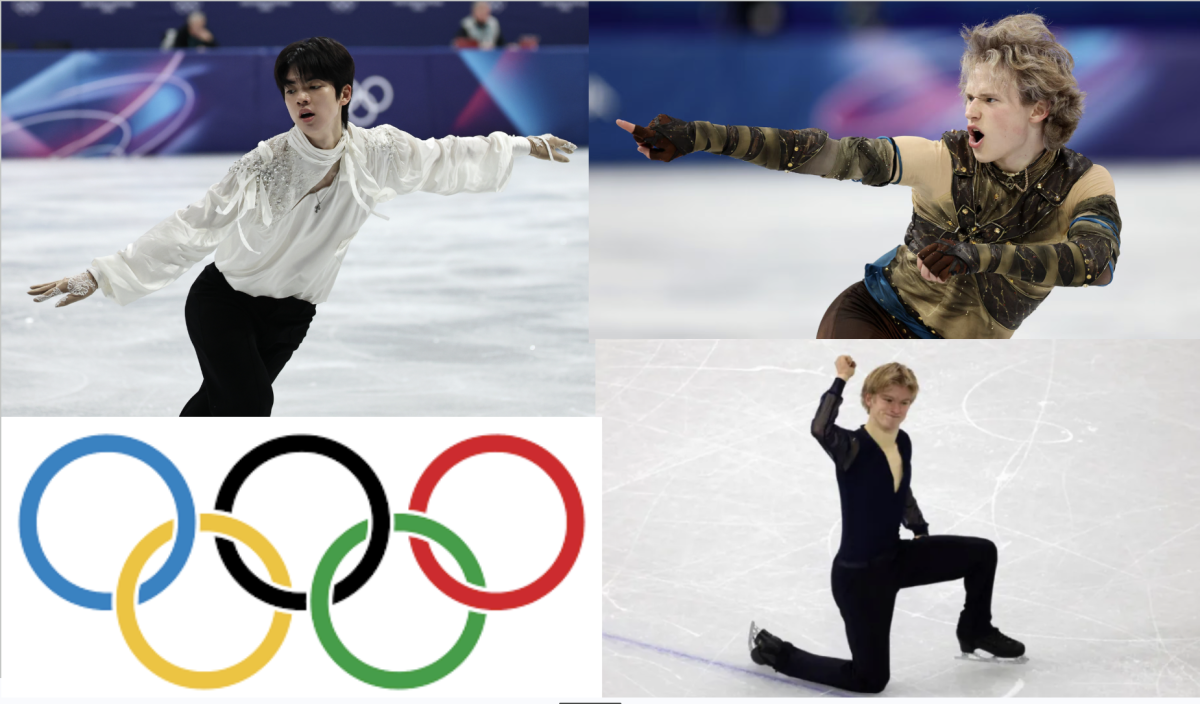
If you are listing famous winter Olympians, Ilia Malinin, AKA the Quad God, absolutely needs to be at the very top, miles away from his competitors. The 21 year old from Virginia has made figure skating history more times than I can count, and he shows no signs of stopping now (just don’t look at his free skate).
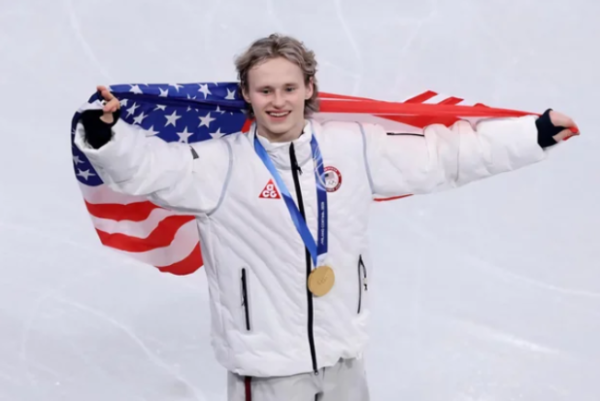
Making his Olympic debut this year, every eye was glued on Malinin (except during his free skate . . . we all had to look away). Adding to the pressure, he had big shoes to fill, with both of his parents competing in the Olympics for ice skating at some point. His mother, Tatiana Malinina, and father, Roman Skorniakov, went to the 1998 Olympics in Uzbekistan, and both qualified for the 2002 Olympics, but Tatiana withdrew. Now, they have retired from their ice skating careers and are focusing on training and coaching their son. You can often see his father on the sidelines cheering him on (even when no one else is!) His mother, on the other hand, gets too nervous to watch his performances and has to step away (a good decision).
What makes Malinin particularly amazing is the Quad Axel. An axel is widely considered the hardest jump, as it takes off forward and forces the athlete to complete an extra half rotation compared to the lutz, toe flip, salchow, and loop. The Quadruple Axel, four and a half rotations, was once believed to be physically impossible, the explosive power and airtime necessary unreachable by humans, but Malinin proved everyone wrong. (Maybe we should look back at his free skating program….) With a base score of 12.5, this move has the potential to propel him above his competitors if executed properly. This definitely earns him the title of Quad God; in fact, he even has a shirt that says it!
Besides the quad axel, Malinin created his own move called the Raspberry Twist: a one foot double Salchow with a one-half pre-rotation, a lateral air orientation, and loose air position (basically it just looks really cool). While it doesn’t have a high base score, its unique and entrancing visual showcases Malinin’s genius on the ice and personal style.
Even if you don’t really understand all of the technical ice skating terms, you can appreciate the skill it takes to do a backflip on the ice. (Ehhh, I think it’s easy.) The move, banned in 1977 due to safety concerns, is absolutely breathtaking, the danger elevating the beauty. No matter how many times he does it, I still can’t help but hold my breath in anticipation. Easily one of my favorite parts of his routine.
Unfortunately, anytime Ilia Malinin is mentioned, you do need to note his notorious (disastrous) free skate performance. (We should take a look at it collectively.) At the peak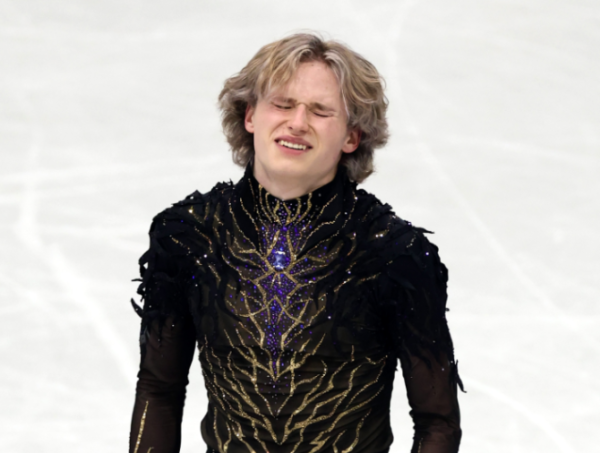 of his fame, with everyone watching, he choked. Despite being highly favored for the gold, and holding a 5.09 lead heading into the free skate, Malinin suddenly dropped to 8th place. I was so excited to watch history being made, the first quad axel on Olympic ice, a record breaking seven quads planned, a masterpiece. Instead, it was like watching a train wreck, and I couldn’t look away even if I tried. He fell twice right at the beginning and ended up only completing two quads. By the end, he placed 15th in that event and 8th overall, losing a medal and a chance for a second Olympic gold.
Nevertheless, Ilia Malinin is an amazing athlete who has the potential to change the sport forever. I, for one, am extremely excited to see him make a comeback in four years, at the next Olympics.
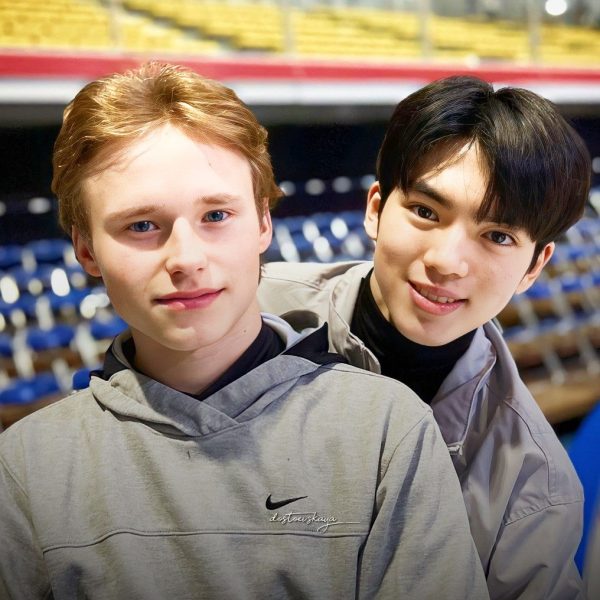
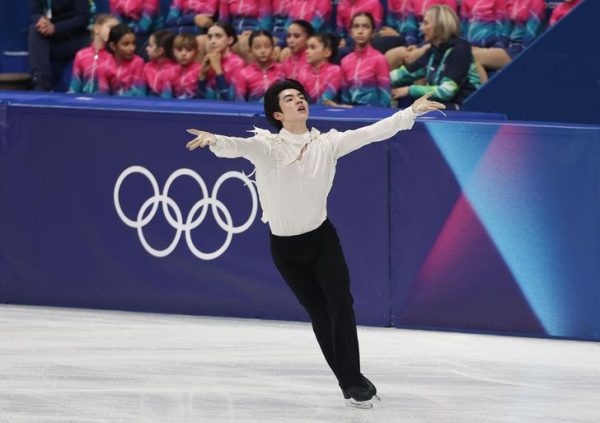 Cha Junwhan, Korea’s male figure skater, has caught the attention of many fans following his performance at the 2026 Milan/Cortina Olympics and has made his mark in ice skating history. In fact, he’s known as the ice prince, and for good reasons. (Quad God is a cooler nickname). If you take a good look at his aesthetic, there is a clear reason as to why he was granted this title. For reference, he was named the most handsome athlete in the 2026 Olympics by Vogue (not the most talented though), a testament to his good visuals. But not only is he known for his charming appearance, but his mastery over the sport has captured the hearts of ice skating fans; his elegant but powerful performances are often filled with so much emotion to the point where it seems like he’s showcasing a story with deep meaning. During his performances, Cha Junwhan glides across the rink with charisma and beauty, a performance so powerful that it could make the world go quiet and bring silence to chaos.
You could assume that Cha Junwhan is the pride and joy of South Korean male ice skating. He was the first Korean male ice skater to win multiple titles, including the 2022 Four Continents Title and the 2025 World Championships Silver, and he continues to claim victories to this day. His signature move, the Ina Bauer, is a move where the skater extends his leg to his back and is often used to transition into beautiful axels. (Not quads though). He is best known for his splendid form in this move and is renowned for his high-level movements that convey artistry and emotion.
My personal favorite move is his final dramatic finish, where he thrusts his arm out with the other on his chest, and falls to his knees with a yearning expression on his face. It’s like the cherry on top, adding much more meaning to his performance. And as he does, the crowd goes wild, and there is not a single audience member without a smile on their face.
Now, many skaters wear tight-fitting clothes that allow comfortable, safe twists and allow the full range of body positions to be observed. But on the other hand, Cha Junwhan wears looser, flowier clothing to create an effortless, more artistic visual effect, using the air around him to tell his story. In his gala performance, he used his clothes to emulate the movements of a butterfly, though sadly, he didn’t flap his arms around wildly like I expected him to. But this only proves the point that he is talented enough to skate with grace, even with difficult clothes to perform in. (If only outfit was taken into account in the medal assigning).
When we look at the scoreboard of the Olympics, spoiler alert, he placed 4th, a heartbreaking 0.98 points away from earning the bronze medal and bringing a medal back home to South Korea. (So… he almost got a medal . . . he didn’t actually get any?) By the way, did I mention that he got 4th overall, with an injured ankle? Yeah, that’s right. With an injured ankle. No, your eyes are not fooling you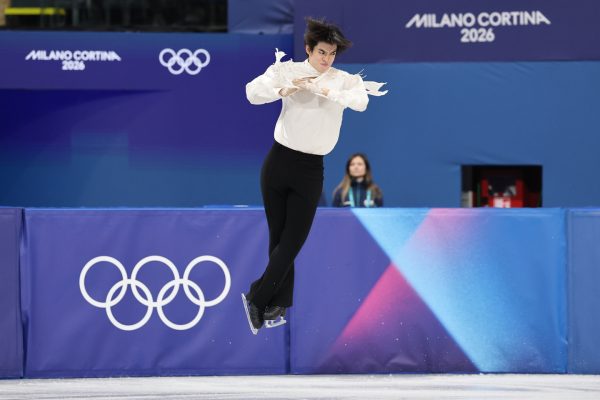 . After the Olympics, it was revealed that he was experiencing an ongoing pain that persisted throughout the events. In an interview, he describes the immense pain he felt, worsened by the rough skate boots. But even with the injury, he was able to persist and make it up as far as 4th place in the leaderboard.
Those who watched the Olympics know that in the free skate program, he made one crucial mistake that cost him the whole show: his quadruple toe loop was under-rotation, and he leaned far too forward, ultimately ending in his crash. (So no medals? So the first loser?) Nevertheless, he still placed 4th overall with his injury, and many of his fans encourage his recovery for the ISU World Figure Skating Championships, where he will make his final comeback – one that will put his name up on the podium and allow him to gain the attention he deserves.
The 23-year-old Italian powerhouse, Daniel Grassl, has been collecting countless awards for years, and he has received no less during the 2026 Milano Cortina Olympics. Born in 2002 and ice skating since 2009, Grassl has been winning championships ever since he was a teenager. 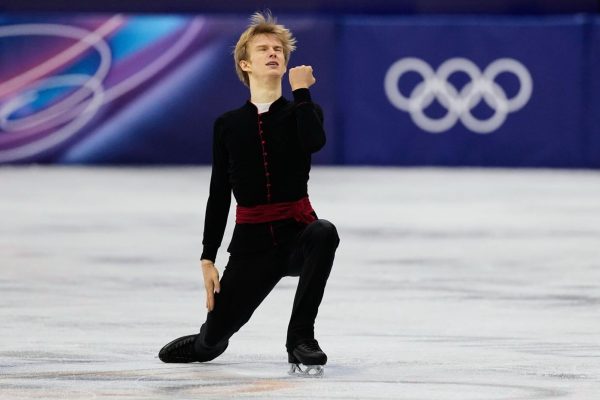
While most teenagers were preoccupied with surviving high school, a young Grassl in 2017 was in Croatia at the Golden Bear of Zagreb, casually ranking 1st in every competition. He not only won gold, but also absolutely smoked the British champion at the time, Graham Newberry, outscoring him by a whopping 13.33 points! Is that not insanity? Not to mention, in that same Croatian rink, Grassl made history by becoming the youngest skater ever to land a quadruple Lutz. If you aren’t a skating nerd, to perform this successfully, the skater has to glide backward, dig the pick of their other skate into the ice for a massive launch, and then rotate in the air before landing on the opposite foot’s outside edge. And Grassl did that four times in one jump. At 15 years old.
But he isn’t just a one-jump wonder. He is the 6-time Italian National Champion and a 10-time ISU Challenger Series medalist, even snagging Italy’s first-ever Grand Prix gold in men’s singles at the John Wilson Trophy in 2022. He is essentially the pride of Italy.
Grassl is world-renowned for his iconic quadruple jumps, specifically the quad Lutz that he absolutely smashed as a teenager, and the quad loop. In fact, he was the first European ever to land a quad loop. That is 2 separate history-making moves, for those counting.
And he sure did not disappoint at the Winter Olympics this year. On February 5th, he fought through the team event, and by February 6th at the Forum di Milano, he was standing on the podium with an Olympic Bronze medal around his neck. In the Men’s Individual, Grassl placed 4th in the short program and sat pretty with a dazzling score of 93.46. Overall, within the Men’s Individual, he managed to finish in the top 10, ranking 9th in the most competitive field ever.
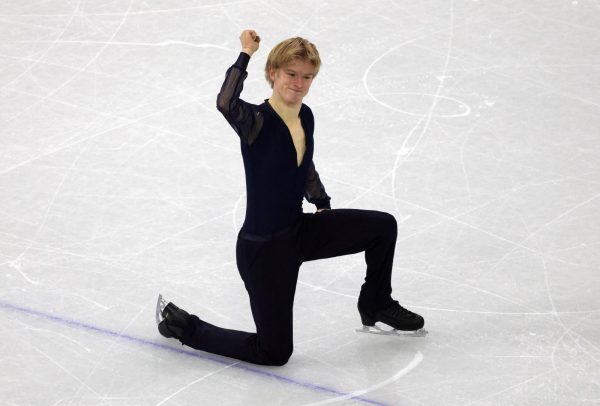 For his individual freeskate, Grassl skated to the soundtrack of the movie Conclave, literally skating to the story of the election of a new Pope. The performance starts with the dramatic statement “The Pope is dead,” echoing throughout the arena as Grassl kicks off a dark and deep performance. Fashion-wise, he hit the ice in a sleek black shirt with a red sash. However, there was some mid-ice wardrobe magic that occurred, and at the climax of the program, Grassl opened his top to reveal an underlayer of white and gold, symbolizing the election of a new Pope! If the Olympics had medals for dramatic reveals and the best storytelling, he would have won gold by a landslide.
As for his short program. “Tango per la libertà,” Grassl was a beast, as to be expected. He nailed a quadruple Lutz-triple toe combination that was so clean it should have been illegal. It’s difficult to even say the name of the move, let alone accomplish it.
Overall, Grassl took on the Olympics with style. He took the Italian atmosphere of the Milan Ice Skating Arena and transformed it into a religious experience. While others are making final comebacks to hopefully reach the podium one day, Grassl already has his Olympic Bronze medal from the team event around his belt. That, coupled with being the first European to land a quad loop, the first Italian man to win a Grand Prix gold, and the only man brave enough to turn the Vatican into a figure skating element, unmistakably proves that Grassl is one-of-a-kind.
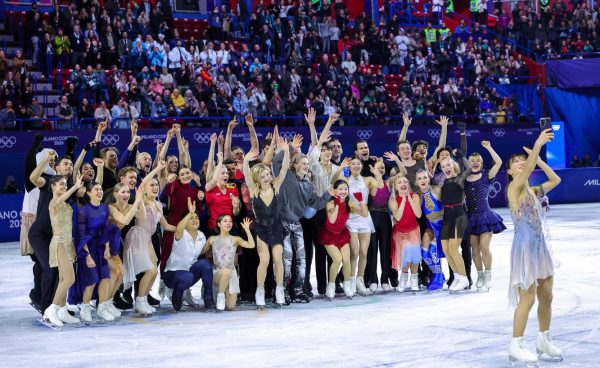
While we can’t agree on who is the best figure skater, we both loved the final performance, the Exhibition Gala. At the end of the competition, when the medals have been decided, top medalists, standout performers, and fan favorites take the ice one last time for a no-stakes chance to express themselves without the pressure of medaling.
Ilia Malinin stole the show with an expressive piece about his struggles with mental health and the negatives of the constant pressure to be the best. For his performance, he sported a simple hoodie and jeans, both from the artist whose song he used, Fear by NF. This routine was one of my favorites of his, and I loved seeing his expressive style and personality shine through.
The artistic performance of Cha Junwhan during the exhibition gala was filled with emotion and identity, portraying Korean culture with the song “Not a Dream” by Song Sohee. He displayed artistic freedom and evoked graceful axels hoping for a chance of redemption from his less than outstanding free skate.
Both skaters also participated in a humorous skit with Nina Petrokina during her own exhibition performance, acting as a rejected suiter, which was a fun additional element to the show.
Daniel Grassl’s performance had a high energy as he skated to a medley of “Sant’allegria” by Ornella Vanoni & Mahmood and “Far l’amore” by Bob Sinclar & Raffaella Carrà. His routine featured a dramatic costume reveal, where he tore off a white shirt mid-skate to reveal a glittery red outfit underneath.
Finally, in the last routine of the 2026 Figure Skating Olympics, all of the skaters came together and said a final goodbye. Entering the ice one by one, they each performed their signature move or recreated their most iconic moment. Ilia Malinin shocked everyone by completing a synchronised backflip with Adam Siao Him Fa. This truly emulated the soul of the games, not only portraying international unity and cooperation but also proving that, even with medals on the line, sports can be an opportunity to gain an amazing support system.
As the crowd cheered louder than ever, they took one last bow in front of the cameras, and the 2026 Olympics figure skating came to an end.