
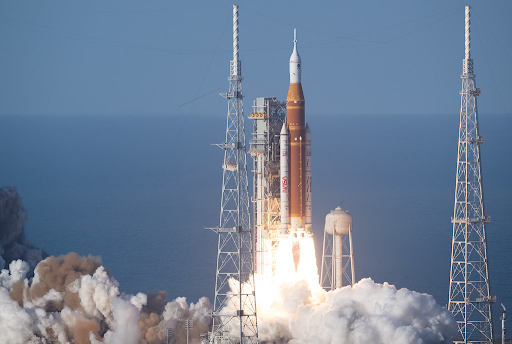
56 years. It’s been 56 years since mankind stepped foot on the moon. For all that time, the only people to go to the moon have been Neil Armstrong, Buzz Aldrin, and Micheal Collins. That is about to change. On April 1, 2026, Artemis II took off headed for the moon. Though the astronauts will not step foot on the moon, they will perform a manned flyby in lunar vicinity to test the technology of their rocket and more.
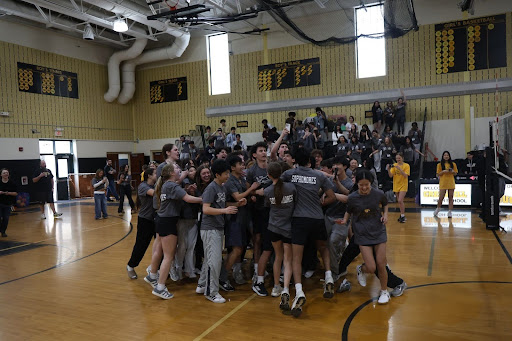
The upcoming launch of Artemis II marks a major milestone in space exploration and a moment of pride and excitement for students and science enthusiasts around the world, including here at Cresskill High School. Led by NASA, this mission will be the first crewed trip around the Moon in over 50 years, since the historic Apollo 17 mission.
Even though the astronauts will not land on the Moon, it is still a huge deal. This mission is all about testing new technology and getting ready for future missions that could actually put humans back on the Moon and maybe even send people to Mars. That is something we have not seen in a long time.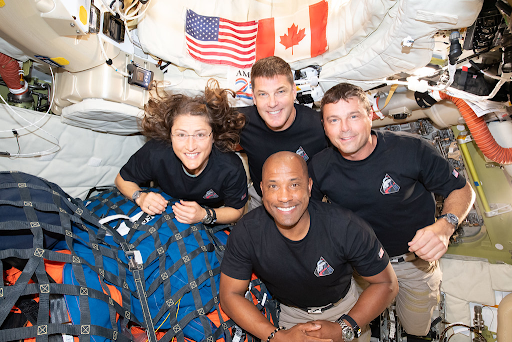
For students at Cresskill, this is not just some faraway science event. It is something that can actually make people think differently about what is possible.
We interviewed Cresskill freshman Max Sowa, who got to see the launch in person. He said the experience was really inspiring and made him realize how much can be accomplished through teamwork. He also shared that it pushed him to be more interested in science and showed him what science can actually lead to in the real world. When talking about the mission itself, Max felt it was successful, especially since it had been so long since a crewed mission had gone toward the Moon, and because everything seemed to go smoothly and prove that NASA’s new technology works.
Cresskill junior Michael had a much more disappointed reaction. He said he was really let down that the mission is not actually landing on the Moon, especially with how much hype there has been around it. He felt that a Moon landing would have been a big moment for the United States, especially during tough times, and something people could really celebrate. Instead, he sees this mission as lacking that one defining moment, which made the whole thing feel less exciting to him. He also mentioned that it is frustrating to have to wait even longer for a real landing, which took away from the overall impact of the launch.
Bio teacher Mr. Boita looked at it more as part of a bigger picture. He mentioned that missions like Artemis II are really meant to be test runs, setting up what comes next rather than being the final goal. He also pointed out that one of the more interesting ideas being talked about is the possibility of a lunar colony. Instead of just visiting the Moon, the long term vision could involve humans staying there, which would completely change how we explore space and could open the door to even deeper missions in the future.
Overall, Artemis II is more than just a rocket launch. It is a big moment in history and a step toward the future of space exploration. Whether it inspires students to go into science or leaves them wanting more, it is still something worth paying attention to. And who knows, maybe one day someone from Cresskill will be watching a launch not from the ground, but from inside the rocket.